
Stargate
An immersive VR healing sanctuary
Stargate is an immersive VR sanctuary where ritual, sound, and spatial storytelling converge to support inner transformation. Designed as a guided experiential journey, it translates meditative and healing practices into cinematic, navigable worlds that help users reconnect through presence, breath, and imagination.
Click HERE for the full concept reel.
Role: Concept development, world-building, experiential design direction
Tools: Unreal Engine, Vizcom, Midjourney
Realm Overview
Temple of Light
A luminous entry space designed to quiet the nervous system and orient the user inward.

Cosmic Mirror
A contemplative environment where users encounter archetypal symbolism, constellations, planetary transits, and reflections of the self.

Verdant Nexus
A nature-based sanctuary focused on grounding, breath, and reconnection with the body.

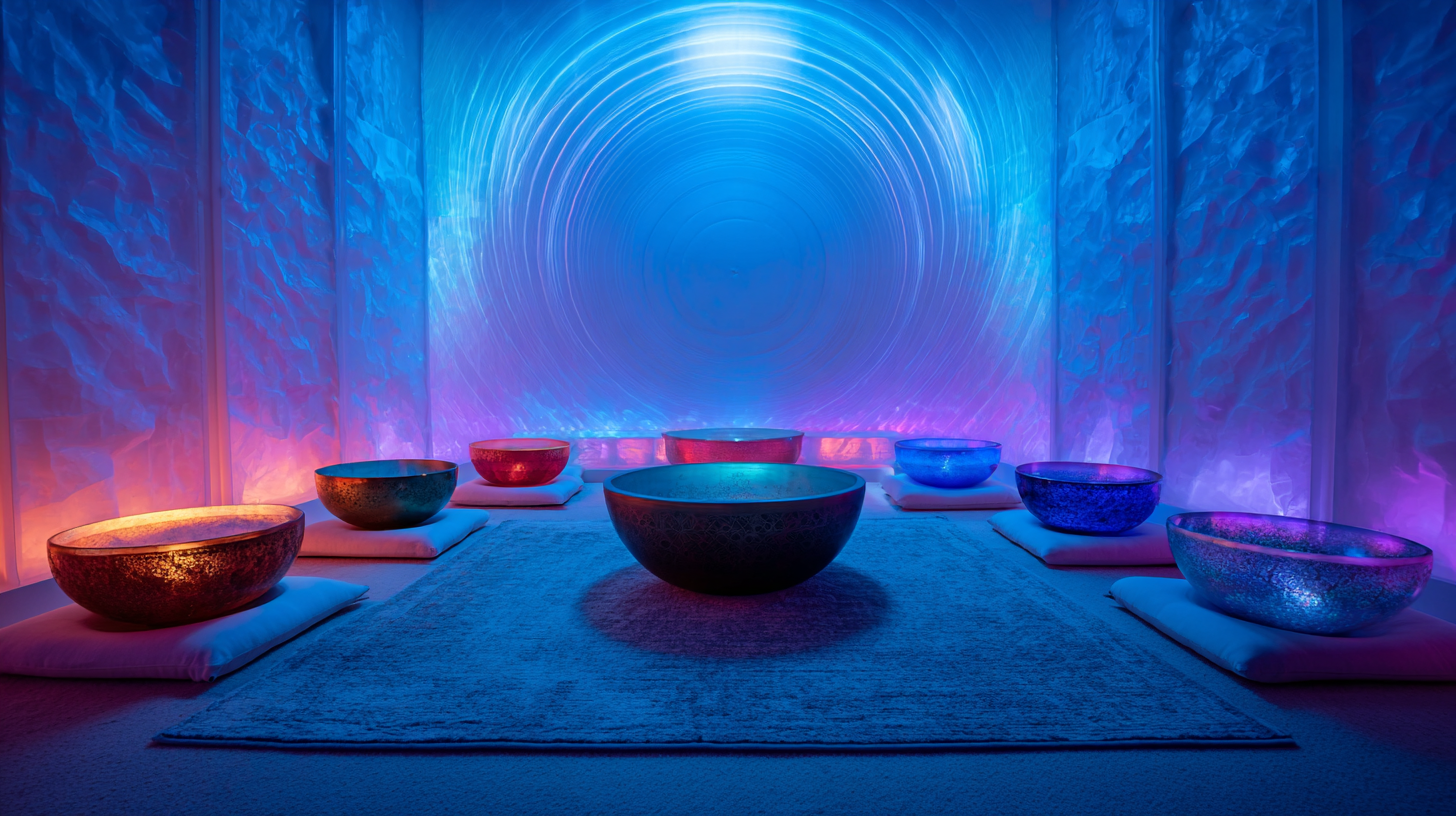
Frequency Chamber
A sound-driven space where vibration, resonance, and rhythm guide altered states of awareness.
Experience Flow
The Stargate experience is structured around a natural flow—guiding users from arrival, to exploration, to practice, and return.

2
Meet your AI Spirit Guide
Enter the Portal:
Stargate Home Screen
5
Integration & Reflection
3
Realm Selection
4

1
Immerse in Practice
Interaction & Technology
Stargate is designed as a guided, low-friction immersive experience—prioritizing presence, accessibility, and emotional flow over complexity.
Navigation & Presence
Experiences are primarily passive and gently guided, allowing users to explore without cognitive overload. Navigation is intuitive and non-intrusive, designed to keep attention inward rather than on controls.Sound & Sensory Design
Sound acts as a primary driver of experience—using frequency, rhythm, and spatial audio to influence mood, breath, and awareness. Light and motion respond subtly to sonic cues, reinforcing a sense of immersion and coherence.Platform Intent
Conceived for XR and spatial computing platforms, Stargate is designed to scale across virtual, mixed-reality, and installation-based environments—supporting both personal and collective experiences.
Visual Systems & Language
Stargate’s visual language is built as a responsive system—where light, color, form, and motion function as emotional and navigational cues rather than decoration.
Across realms, environments are shaped by intentional geometry, atmospheric depth, and subtle motion designed to support presence and introspection. Color palettes shift based on emotional intent, while light behaves as both guide and threshold—signaling transitions between states of awareness.
Rather than relying on literal interfaces, Stargate uses visual rhythm, spatial composition, and abstraction to communicate direction, pacing, and mood—allowing users to move intuitively through the experience without instruction.
Potential Applications
While conceived as a speculative VR experience, Stargate is designed to adapt across a range of immersive and physical contexts.
VR and spatial meditation platforms
Immersive installations and pop-up environments
Wellness retreats and guided group experiences
Cultural, museum, or experiential exhibitions
Branded experiential activations centered on presence and wellbeing